
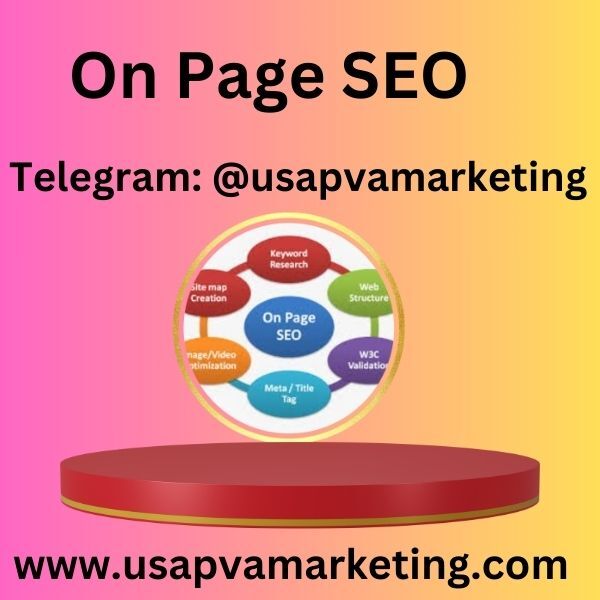
On Page SEO
On-page SEO is crucial for your website’s success. It helps search engines understand your content better.
Understanding on-page SEO means knowing how to optimize each part of your webpage. This includes elements like titles, headers, and images. The goal is to make your content easy for both users and search engines to read. Good on-page SEO can improve your website’s visibility and ranking.
By following best practices, you can attract more visitors. In this blog post, we’ll explore the key elements of on-page SEO. This will help you create web pages that perform well in search results. Let’s dive into the basics and see how you can improve your website’s performance.
Introduction To On-page Seo
On-Page SEO is the practice of optimizing individual web pages. This helps them rank higher in search engines. It also earns more relevant traffic. On-Page SEO includes both the content and HTML source code of a page. It is different from Off-Page SEO which deals with links and other external signals.
Importance Of On-page Seo
On-Page SEO is crucial for your website’s success. It ensures that your content is relevant. It also makes your website user-friendly. A well-optimized page can increase your search engine rankings. This leads to more organic traffic. It also improves the user experience. Google and other search engines prioritize well-optimized pages. This means your website can reach more people.
Key Elements
On Page SEO
Understanding the key elements of On-Page SEO is important. Here is a list of the main factors:
- Title Tags: This is the title of your web page. It should be descriptive and include keywords.
- Meta Descriptions: These are short summaries of your page’s content. They should be compelling and include keywords.
- Headings: Use proper heading tags (H1, H2, H3) to organize your content. This helps search engines understand your content structure.
- Content: Your content should be relevant, valuable, and include keywords naturally. Avoid keyword stuffing.
- URL Structure: URLs should be clean and include keywords. This makes them easier to read for both users and search engines.
- Image Optimization: Use alt text for images. This helps search engines understand what the images are about.
- Internal Linking: Link to other pages on your site. This helps users and search engines navigate your site better.
| Element | Description |
| Title Tags | Descriptive titles with keywords. |
| Meta Descriptions | Compelling summaries with keywords. |
| Headings | Proper heading tags for content structure. |
| Content | Relevant, valuable content with natural keywords. |
| URL Structure | Clean URLs with keywords. |
| Image Optimization | Use alt text for images. |
| Internal Linking | Links to other pages on your site. |
These elements help search engines understand your content. They also improve your site’s usability. Focus on these key elements to improve your On-Page SEO.
Keyword Research
Keyword Researchs the foundation of any successful on-page SEO strategy. It helps you understand what your audience is searching for. By finding the right keywords, you can create content that matches their needs and drives traffic to your site.
Finding Relevant Keywords
To find relevant keywords, start with a broad topic related to your niche. Use tools like Google Keyword Planner or Ubersuggest. These tools help you discover words and phrases your audience searches for.
Analyze the search volume and competition for each keyword. Focus on keywords with high search volume and low competition. This ensures your content reaches more people without too much effort.
Here’s a simple table to organize your keywords:
| Keyword | Search Volume | Competition |
| On Page SEO | 10,000 | Low |
| SEO Tips | 8,000 | Medium |
| Keyword Research | 5,000 | High |
Using Long-tail Keywords
Long-tail keywords are phrases with three or more words. They are more specific and less competitive. For example, “best On Page SEO tips” is a long-tail keyword.
Using long-tail keywords helps target a niche audience. These users are usually closer to making a decision. This means higher conversion rates for your content.
Here are some benefits of long-tail keywords:
- Higher relevance to the search query.
- Lower competition, making it easier to rank.
- Better targeting for specific user intent.
Use tools like AnswerThePublic or Google Autosuggest to find long-tail keywords. These tools provide a list of questions and phrases related to your topic. Integrate these long-tail keywords naturally into your content. Avoid keyword stuffing. Focus on providing valuable information that answers the user’s query.
Title Tags Optimization
Title tags are crucial for on-page SEO. They guide search engines and users about a page’s content. Optimizing title tags can improve your site’s visibility and click-through rates. Let’s explore how to craft effective titles and incorporate keywords.
Crafting Effective Titles
On Page SEO
Effective titles should be clear and concise. Aim for 50-60 characters. This ensures the title displays well in search results. Use actionable words to attract clicks. For example:
- Discover
- Learn
- Explore
Include your brand name at the end if space allows. This builds brand recognition. Here is a structure to follow:
| Element | Example |
| Primary keyword | Best Running Shoes |
| Secondary keyword | for Women |
| Brand name | | Nike |
Incorporating Keywords
Keywords should be naturally included in the title. Place the primary keyword at the beginning. This helps search engines understand the main topic. Avoid keyword stuffing. It makes titles look unnatural. Here is an example:
Good: Best Running Shoes for Women | Nike
Bad: Running Shoes Best Running Shoes Shoes for Running
Use variations of keywords to cover different search queries. This increases your chances of ranking. Here are a few tips:
- Use synonyms
- Consider long-tail keywords
- Analyze competitor titles
Remember, a well-optimized title tag is essential for on-page SEO success.
Meta Descriptions
Meta descriptions are short snippets that describe a webpage’s content. These snippets appear in search results under the page title. A well-crafted meta description can boost your click-through rate (CTR). It provides users a preview of what they will find on your page.
Writing Compelling Descriptions
Writing a compelling meta description involves creativity and precision. Aim for a length of 150-160 characters. This ensures the entire description displays on search result pages. Use action words to engage the reader. For example:
- Discover
- Learn
- Explore
Include your primary keyword to improve relevance. Make sure the description matches the page content. Avoid misleading the reader. Give them a clear idea of what to expect.
Best Practices
Follow these best practices to create effective meta descriptions:
- Keep it concise: Stick to 150-160 characters. Long descriptions get cut off.
- Use active voice: Engage your audience directly. For example, “Get the best tips” instead of “The best tips are available.”
- Incorporate keywords: Use relevant keywords naturally. This helps with search engine ranking.
- Provide value: Explain the benefit of clicking on the link. Why should the reader visit your page?
- Include a call to action: Encourage the reader to click. Phrases like “Read more” or “Find out” work well.
Here is a table summarizing these best practices:
| Best Practice | Explanation |
| Keep it concise | Use 150-160 characters to ensure full display in search results. |
| Use active voice | Engage the reader directly with active language. |
| Incorporate keywords | Include relevant keywords naturally to boost relevance. |
| Provide value | Explain the benefit of visiting your page. |
| Include a call to action | Encourage clicks with phrases like “Read more.” |
Remember, your meta description is often the first impression of your webpage. Craft it carefully to attract and engage users.
Header Tags
Header tags are essential for On Page SEO. They help organize and structure your content. Search engines use them to understand your page’s hierarchy. Proper use of header tags can improve your search engine ranking and user experience.
Structure And Hierarchy
Header tags range from
to
. Each tag signifies a different level of importance.
- : Main heading, used once per page.
- : Subheadings, used to divide sections.
- to
: Further sub-sections.
Use header tags to create a clear content hierarchy. This helps both readers and search engines. A well-structured page is easier to read and navigate.
Here is an example structure:
On Page SEO Main TopicSubtopic OneDetail OneDetail TwoSubtopic TwoDetail Three
Keyword Placement
On Page SEO Include keywords in your header tags. This signals to search engines what your content is about. Place your primary keyword in the
tag. Use secondary keywords in
and
tags.
Here are some tips:
- Use the main keyword in the
tag. - Use variations of the keyword in
tags. - Include related terms in
tags.
For example:
Best SEO Practices for BeginnersWhy SEO is ImportantUnderstanding Search EnginesBasic SEO TechniquesOn Page SEO Tips
Proper keyword placement in header tags improves SEO. It makes your content more relevant to search queries.
Content Quality
In the world of On Page SEO, content quality plays a crucial role. High-quality content improves your site’s visibility and user engagement. Search engines reward websites that provide valuable, original content. Let’s explore key aspects of creating quality content.
Creating Valuable Content
Creating valuable content means writing content that meets the needs of your audience. Here are some tips:
- Understand your audience’s interests and needs.
- Provide clear and concise information.
- Use simple language to explain complex topics.
- Include relevant keywords naturally.
- Update your content regularly to keep it fresh.
Valuable content keeps visitors engaged and encourages them to return. It also improves your site’s authority in your niche.
Avoiding Duplicate Content
Duplicate content can harm your site’s SEO performance. Search engines may penalize websites with duplicate content. To avoid this:
- Check your site for duplicate content using tools like Copyscape.
- Ensure each page has unique content.
- Use canonical tags to indicate the preferred version of a page.
- Rewrite similar content with a fresh perspective.
- Keep track of content sources and citations.
By avoiding duplicate content, you improve your site’s credibility and search rankings.
Image Optimization
Image optimization is a critical part of On Page SEO. It not only improves your website’s speed but also helps search engines understand your content better. By optimizing images, you can enhance the user experience and boost your site’s ranking. Let’s dive into the key aspects of image optimization.
Alt Text Usage
Alt text, or alternative text, describes the content of an image. This text is essential for web accessibility. It helps visually impaired users understand your images. Search engines also use alt text to comprehend the context of images. Here are some tips for effective alt text usage:
- Keep it descriptive and relevant.
- Include your target keywords naturally.
- Avoid keyword stuffing.
For example, instead of “image1.jpg,” use “red-apple-on-tree.jpg.” This describes the image and includes a keyword.
File Size And Format
Large image files can slow down your website. This affects user experience and SEO. Compress your images without losing quality. Use tools like TinyPNG or JPEG-Optimizer.
Choose the right format for your images:
| Format | Use For |
| JPEG | Photographs and images with many colors. |
| PNG | Images with text, logos, and transparent backgrounds. |
| GIF | Simple graphics and animations. |
By choosing the right format, you can maintain quality and reduce file size.
Internal Linking
Internal linking is a key aspect of on-page SEO. It involves linking one page of your website to another. This helps search engines understand your site structure. It also enhances user experience by guiding visitors through related content.
Linking Strategies
Effective internal linking strategies can boost your On Page SEO. Here are some tips:
- Anchor Text: Use descriptive anchor text. It should reflect the linked page’s content.
- Link Depth: Link deep within your site. Avoid linking only to top-level pages.
- Relevance: Ensure links are contextually relevant. This helps both users and search engines.
Consider using a linking hierarchy. This method organizes links by importance. For example:
- Main pages
- Sub-categories
- Individual posts
| Link Type | Description |
| Contextual Links | Links within the main content |
| Navigational Links | Links in menus and sidebars |
Improving User Navigation
Internal linking also improves user navigation. This can reduce your bounce rate. When users find related content easily, they stay longer.
Breadcrumbs are useful for navigation. They show users their path through your site. This makes backtracking easier.
Here are some ways to enhance user navigation:
- Clear Menus: Create clear and simple navigation menus.
- Related Posts: Add related posts at the end of articles.
- Sitemap: Include a sitemap. It helps users find content quickly.
Remember, a well-linked site is easier to navigate. This improves user experience and boosts SEO. Keep your links relevant, clear, and helpful.
Mobile Friendliness
Mobile Friendliness is crucial for on-page SEO. More people use mobile devices to browse the internet. Websites must be accessible and functional on smartphones and tablets. Ensuring a mobile-friendly site improves user experience and boosts search engine rankings.
Responsive Design
A responsive design adjusts your site’s layout based on the screen size. This means your website looks good on desktops, tablets, and phones. A responsive design uses flexible grids, images, and CSS media queries.
Here are key features of a responsive design:
- Fluid grid layouts
- Flexible images
- Media queries
Implementing these features ensures your site remains visually appealing and functional on any device.
Page Speed
Page speed is vital for a good user experience. Slow-loading pages frustrate users and increase bounce rates. Google also considers page speed in its ranking algorithm.
To improve page speed:
- Optimize images
- Minimize CSS and JavaScript files
- Enable browser caching
Using tools like Google PageSpeed Insights can help identify speed issues. Fast-loading pages enhance user experience and improve SEO rankings.
Tracking And Analytics
Tracking and Analytics are crucial for measuring the success of your On-Page SEO efforts. By understanding how your website performs, you can make informed decisions to improve visibility and user experience. This section will cover the importance of Monitoring SEO Performance and the benefits of Making Data-Driven Decisions.
Monitoring Seo Performance
Keeping track of your SEO metrics helps identify which strategies work. Use tools like Google Analytics and Google Search Console to monitor these metrics.
| Metric | Importance |
| Organic Traffic | Measures the number of visitors from search engines |
| Bounce Rate | Indicates the percentage of visitors who leave quickly |
| Average Session Duration | Shows how long visitors stay on your site |
| Page Load Time | Impacts user experience and search rankings |
Regularly monitor these metrics. Adjust your strategies based on the data. For instance, if the bounce rate is high, improve your content’s relevance.
Making Data-driven Decisions
Data helps make better decisions. Analyzing data can highlight areas needing improvement. If organic traffic drops, review your keywords and content strategy.
Use the following steps for data-driven decisions:
- Set Clear Goals: Define what success looks like.
- Collect Data: Use reliable tools for data collection.
- Analyze Trends: Look for patterns in your data.
- Implement Changes: Make adjustments based on your analysis.
- Review Results: Measure the impact of your changes.
Data-driven decisions lead to continuous improvement. They help achieve better SEO results over time.
Frequently Asked Questions
What Is On Page Seo?
On Page SEO involves optimizing individual web pages. It helps improve search engine rankings. This includes content, HTML source code, and images.
Why Is On Page Seo Important?
On Page SEO ensures your website is search engine friendly. It helps improve visibility and ranking. This leads to more organic traffic.
How Does Meta Description Affect Seo?
A good meta description boosts click-through rates. It provides a summary of the page content. Search engines use it to display snippets.
What Are Seo-friendly Urls?
SEO-friendly URLs are short and descriptive. They include keywords relevant to the content. This helps search engines understand the page.
Conclusion
Effective on-page SEO boosts your website’s visibility and ranking. Focus on quality content, proper keyword placement, and user experience. These elements attract more traffic and keep visitors engaged. Regularly update your content to stay relevant. Monitor your site’s performance and adjust strategies as needed.
Consistent efforts lead to long-term success. Remember, SEO is a continuous process. Keep learning and adapting to new trends. Your dedication will pay off in the end. Make your website valuable and user-friendly. This way, both search engines and visitors will appreciate your efforts.


Reviews
There are no reviews yet.